
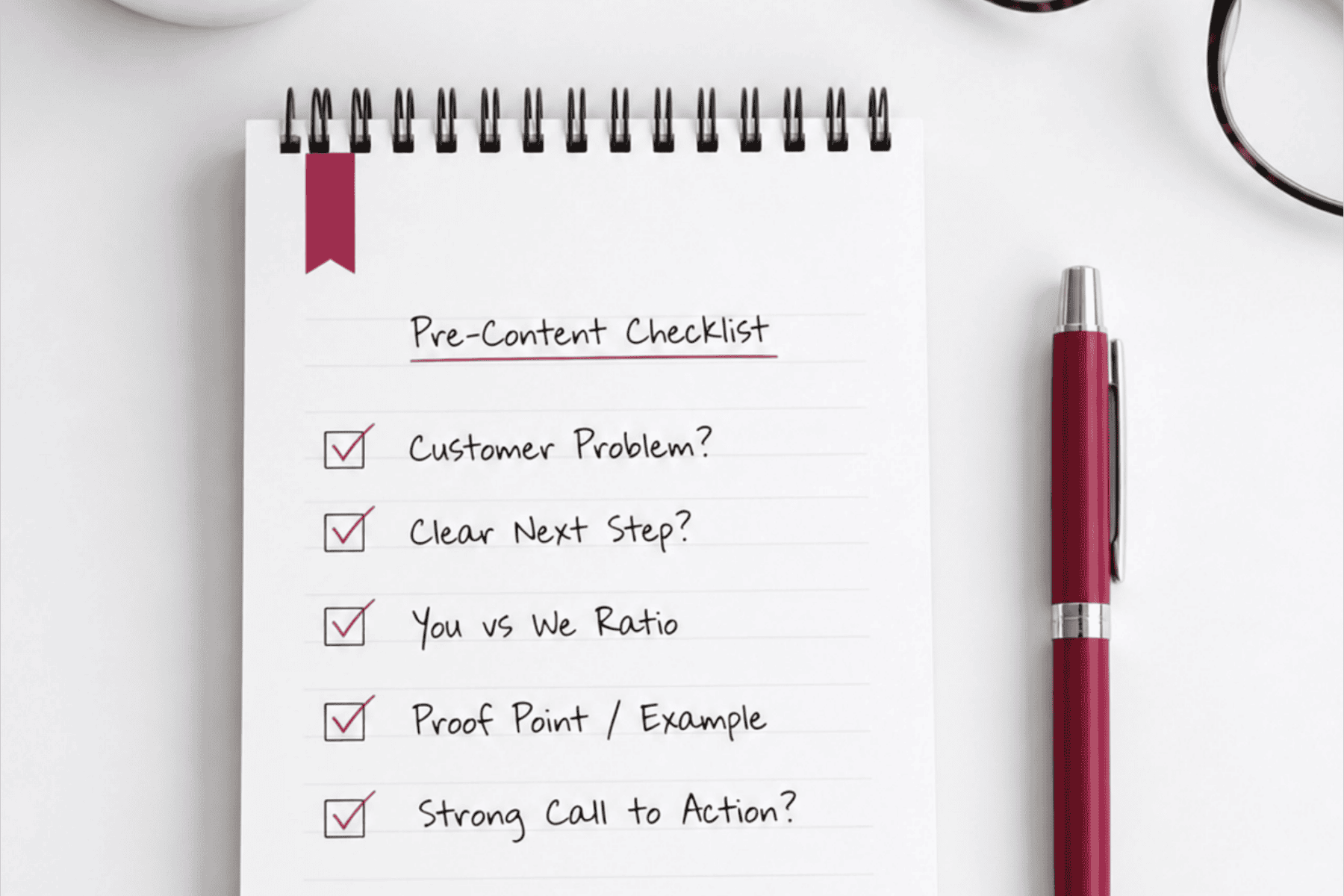
You’ve probably heard it before: “We are the leading provider of…” or “We are passionate about…” or “We’ve been in business since 1994.”
It sounds professional, right? It feels like you’re building authority and showing your experience. But here’s the uncomfortable truth: Most visitors don’t actually care about you yet.
When a potential client lands on your website, they aren’t looking for a biography. They are looking for a solution to a problem. They are asking one question, over and over: “Can you help me?”
If your website is buried in “we,” “us,” and “our,” you might be suffering from the “We” Problem. It’s one of the most common design mistakes service-based businesses make, and it’s a silent killer of trust and conversions.
The About Page Isn’t Actually About You
This is the biggest hook in the “We” Problem.
Most business owners treat their About page like a digital resume. They list their history, their awards, and their office dog. While those things have a place, the real purpose of an About page is to help the visitor decide if they are in the right place.
Think of it this way: Your About page should be about 60% them and 40% you.
A ux focused web design strategy treats the About page as a bridge. It connects your expertise to their specific pain points. Instead of starting with “I started this company in a garage,” try starting with, “You’re here because you’re tired of [specific problem], and I’ve spent 10 years helping people like you fix it.”
When you flip the focus, you stop being the hero of the story and start being the guide.
Why the “We” Problem Kills Trust
In the Denver metro area, the market for professional services is crowded. Whether you’re a lawyer, a contractor, or a consultant, you’re competing with dozens of other “passionate experts.”
When everyone says “We are the best,” the phrase loses all meaning. It becomes marketing noise.
Effective website strategy for service businesses focuses on building trust through empathy, not ego. When you talk too much about yourself, you accidentally send three negative signals:
- You’re out of touch: You don’t seem to understand the customer’s actual struggle.
- You’re generic: You sound like every other agency using the same tired jargon. (If you’re stuck on terms, check out our SEO jargon handbook).
- You’re high-maintenance: The visitor has to do all the “work” to figure out how your services actually apply to them.
The 2-Minute Pronoun Audit
Want to know if you have a “We” Problem? Open your homepage and your About page. Do a quick count. How many times do you use the words “We,” “I,” or “Our” versus “You” and “Your”?

If your “we” count is double your “you” count, your messaging is business-centric, not customer-centric.
How to Flip the Script
Fixing this doesn’t require a full website rebuild. Often, it’s just a matter of reframing your existing sentences.
The “We” Statement: “We have 20 years of experience in HVAC repair.”
The “You” Statement: “You get peace of mind knowing your repairs are handled by a team with 20 years of experience.”
The “We” Statement: “We are passionate about high-quality design.”
The “You” Statement: “You deserve a website that looks professional and actually works as hard as you do.”
See the difference? The “You” statement takes the same fact (your experience or passion) and turns it into a benefit for the reader.
UX-Focused Web Design is About Better Listening
As a denver web design agency, we see a lot of “pretty” websites that fail because they don’t listen to the user.
UX (User Experience) isn’t just about where the buttons are; it’s about the psychological journey of the visitor. If a visitor feels like you are shouting your credentials at them, they’ll leave. If they feel like you are listening to their problems, they’ll stay.
Strategic UX design maps out the visitor’s questions:
- What do you do? (Clarity)
- Can you solve my specific problem? (Empathy)
- Why should I trust you? (Proof)
- What do I do next? (Action)
If your “About” section or your homepage headers are only answering “Who are you?”, you’re missing 75% of the conversation.
Moving From Business-Centric to Customer-Centric
The shift from “We” to “You” is the hallmark of a mature business that understands its audience. It shows that you value your client’s time and that you’ve done the work to understand their world.

This is especially true for local service businesses. When someone is looking for local SEO denver support or a new website, they are usually frustrated. They might have been burned by a previous agency or they’re overwhelmed by technical jargon.
By leading with their needs, you immediately differentiate yourself from the “bloated agencies” that only talk about their own “innovative solutions.”
Stop Talking, Start Converting
Your website is your hardest-working employee. If that employee spent all day in meetings talking about their own college degree instead of solving company problems, you’d probably have a talk with them.
It’s time to have that talk with your website.
Review your copy. Look for the “We” traps. Ask yourself, “So what?” for every claim you make. If you say you’re “innovative,” ask: “So what does that do for the client?” Then, write that instead.
At Smart Journey Digital, we help service-based business owners in Denver and beyond clear out the jargon and the “we-heavy” copy to build websites that actually build trust. We don’t just make things pretty; we make them practical.
Ready to see if your website is working for you or against you?
Let’s look at your current strategy together. We offer practical UX-focused web design and strategy sessions that cut through the noise and get to the heart of what your customers actually need.