
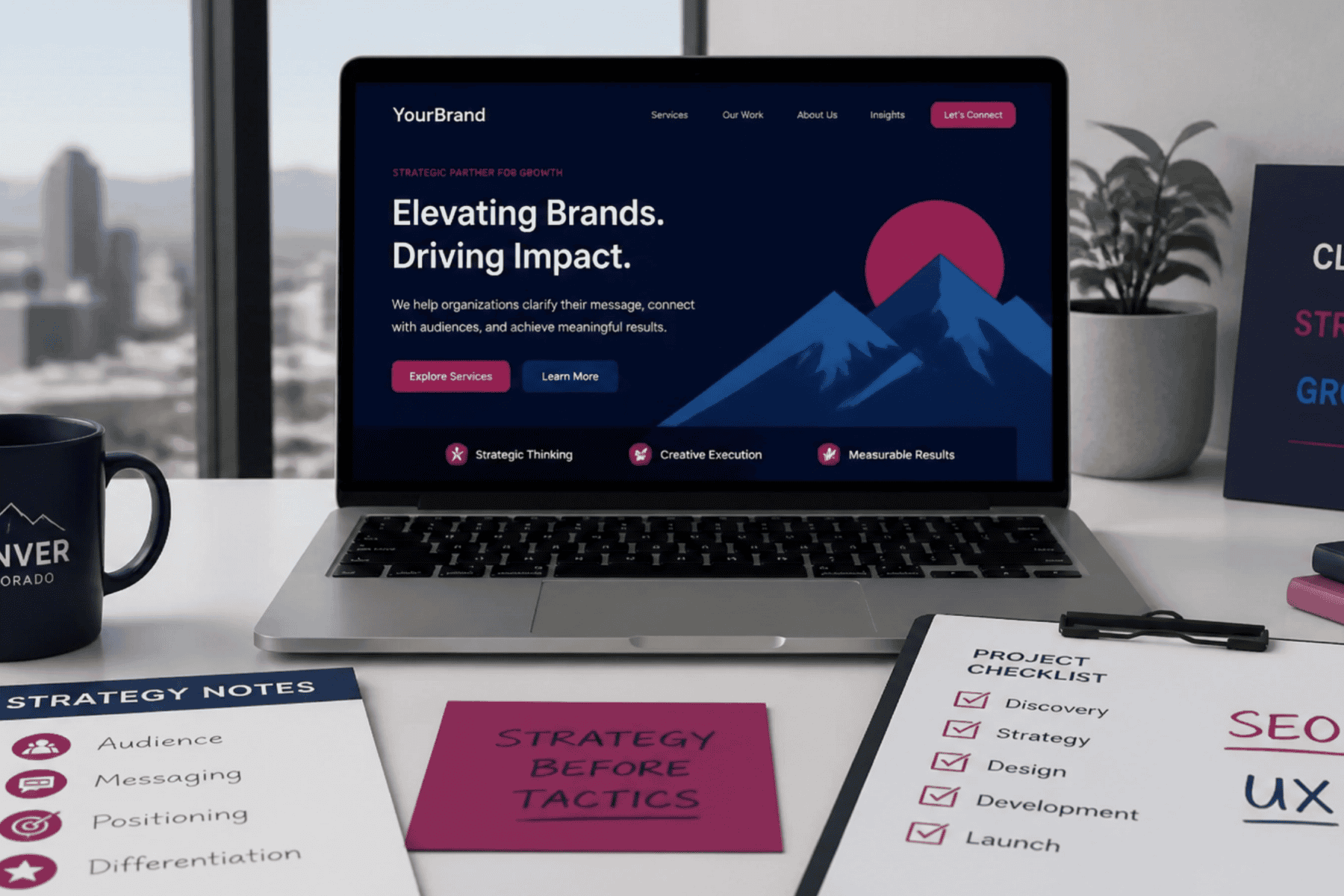
It happens more often than you’d think. A service-based business owner in the Denver metro area, maybe a roofer in Lakewood, a consultant in LoDo, or a boutique law firm in Cherry Creek, decides it’s time for a digital upgrade. They spend $10,000, $15,000, or even $20,000 on a brand-new website.
When the site launches, it looks stunning. The gradients are smooth, the animations are sleek, and the photography is high-end. It’s objectively “pretty.”
But then, the weeks turn into months. The phone doesn’t ring more often. The contact forms stay empty. And when the business owner searches for “web design Denver” or their own specific services, they find themselves buried on page four of Google, while their competitor, with a site that looks like it was built in 2018, is snagging all the leads.
Welcome to the Pretty Website Trap.
At Smart Journey Digital, we see this all the time. Business owners are sold a visual “vibe” by designers who don’t understand business strategy. A pretty website is useless if it’s just a digital paperweight that no one finds and no one trusts.
Aesthetics are the Invitation, Strategy is the Conversation
Don’t get us wrong: design matters. A messy, broken website from 2005 screams “out of business.” But design is only one piece of the puzzle.
Think of your website like a physical storefront. “Pretty” is the window display. It gets people to look. But if they walk inside and the layout is confusing, the staff doesn’t speak their language, and there’s no clear way to actually buy anything, they’re going to walk right back out.
Small business web design in Denver needs to be about more than just a nice color palette. It needs to be about:
- Findability: Can the right people find you in the first place?
- Clarity: Do they know exactly what you do within five seconds?
- Trust: Do they believe you are the expert they need?
- Action: Is the path to contacting you frictionless?
If your current designer focused 90% of their time on your logo and 10% on your website strategy, you’ve fallen into the trap.
The “Web Design Denver” Reality: Why Most Local Sites Fail at SEO
If you’re a local service business, you aren’t competing against the entire world; you’re competing for the attention of people in your backyard.
Many agencies focus on “national” SEO or use generic keywords that never move the needle. When we talk about web design in Denver, we aren’t just talking about how the pixels look on the screen. We’re talking about Local SEO.
A “pretty” site often fails here because designers prioritize giant, uncompressed images (which kill load speed) or fancy JavaScript animations (which search engines often struggle to read). If your site takes five seconds to load on a mobile phone in a coffee shop on Colfax, Google is going to penalize you, and your potential client is going to hit the “back” button.
Real SEO vs. “Checkmark” SEO
Most agencies “do SEO” by checking a few boxes: they give you a meta description and a title tag and call it a day. Real SEO for a Denver business involves:
- Service-Specific Strategy: Not just “Plumber,” but “Emergency Pipe Repair in Aurora.”
- UX-Focused Structure: Organizing your site so Google knows exactly which page is the most important for which search.
- Technical Performance: Making sure your WordPress site is fast, secure, and mobile-friendly.
If you’re tired of the jargon, you can check out our SEO Jargon Handbook to see what those agencies are actually saying (and what they’re hiding).
The Three Pillars of a Lead-Generating Website
To escape the Pretty Website Trap, you need to shift your focus from “how it looks” to “how it works.” We focus on three core pillars:
1. Messaging (The “What”)
If a visitor has to guess what you do, you’ve already lost them. Avoid clever headlines. Use clear ones. Instead of “Elevating Your Digital Horizon,” try “WordPress Support and SEO for Denver Service Businesses.” It’s not poetic, but it pays the bills.
2. Trust Signals (The “Why”)
In a world of fly-by-night operations, trust is your most valuable currency. This means more than just a “Testimonials” page. It means integrating reviews, certifications, and real photos of your team throughout the site. Our design mistakes guide covers how many businesses actually hurt their trust by over-polishing their site.
3. User Experience (The “How”)
UX is the art of getting out of the user’s way. If your “Contact” button is hidden in a “hamburger menu” or requires a 12-field form to fill out, you are losing leads. Strategic web design makes the “next step” the easiest thing to do on the page.
UX is Not Just “Making it Look Good”
There is a common misconception that User Experience (UX) is just a fancy word for “design.” It’s not. UX is psychological. It’s about understanding the anxiety a customer feels before they book a $5,000 service and using the website to alleviate that anxiety.
For example, a high-end real estate site in Denver shouldn’t just show pretty houses. It should show a clear process: How do we start? What happens after I call? How do you protect my data?
When we build a UX-focused website, we are mapping out the customer’s journey from “skeptical stranger” to “confident lead.” A “pretty” site focuses on the developer’s portfolio; a UX site focuses on the customer’s needs.
Is Your Site a Hostage?
Another part of the “trap” is the technical one. Many Denver business owners get a beautiful site built, only to find they can’t change a single word of text without paying the agency $200 an hour. Or worse, the site is built on a proprietary platform that they don’t even own.
We believe in digital asset ownership. Your website should be a tool you control. That’s why we specialize in WordPress, it’s flexible, you own it, and with the right maintenance and support, it will last for years.
How to Tell if Your Website is Actually Working
If you aren’t sure if your site is a lead-gen machine or a digital paperweight, ask yourself these three questions:
- Can I find my site for my core service + “Denver” without typing my business name?
- Does my site load in under 2 seconds on a mobile device?
- Does my site have a clear, primary call to action (like “Book a Consult”) visible on every page?
If the answer to any of those is “no,” you don’t need a “flashier” site. You need a better strategy.
Stop Guessing, Start Growing
You don’t always need a full website rebuild. Often, the problems can be fixed with better messaging, cleaner design, and a real SEO strategy. We help you figure out what will make the biggest difference before you spend money in the wrong place.
Ready to see where your site is actually standing? Let’s take a look at your current strategy and see if we can turn that “pretty” site into a practical business asset.
Explore our Website Strategy & SEO Services
Frequently Asked Questions
Why isn’t my “pretty” website ranking on Google?
Google doesn’t care how nice your site looks. It cares about page speed, mobile responsiveness, clear content structure, and whether you are providing the information users are looking for. A “pretty” site often sacrifices these technical elements for visual flair.
Does a website redesign always mean a full rebuild?
Not at Smart Journey Digital. We only recommend a full rebuild if your current platform is holding you back or if the foundation is fundamentally broken. Sometimes, a “Website Fix Sprint” is all you need to get things back on track.
How long does it take to see results from SEO in Denver?
SEO is a marathon, not a sprint. While some technical fixes can show results in weeks, a comprehensive strategy typically takes 3 to 6 months to start showing significant movement in competitive local markets like Denver.
What is the most important part of a service-based business website?
Trust. If your visitor doesn’t trust that you are a real, local, and competent expert, they won’t give you their contact information, no matter how “pretty” your buttons are.